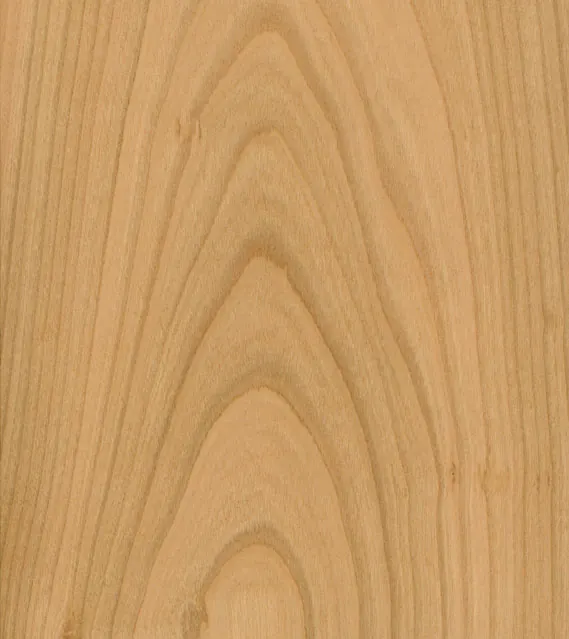
CHERRY VENEER
Cherry Veneer
欧洲樱桃木 · Prunus avium
European Cherry · Prunus avium
CHERRY VENEER
欧洲樱桃木 · Prunus avium
European Cherry · Prunus avium
Cherry (Prunus avium) is supplied by Zhanhai as sliced veneer, with species, figure and thickness confirmed against the order specification. Stock species are held for standard categories; dyed and special figure variants are produced per order.
Figures shown are typical ranges. Final supply, availability and figure are confirmed with the quotation and approved sample.
| Botanical name | Prunus avium |
|---|---|
| Common name | Cherry |
| Origin | Europe and Asia |
| Air-dry density | 600 kg/m³ air-dry |
| Janka hardness | 950 lbf |
| Structure | Semi-ring-porous, fine even texture |
| Typical thickness | 0.3 mm / 0.5 mm / 0.6 mm / 0.8 mm |
| Sheet size | 2500 × 1250 mm |
| Availability | Natural, engineered and dyed; FSC material on request |
The characteristics below describe the species as a whole. Colour, figure and grain vary with growing conditions, log source and cut orientation, which is why every order is confirmed against a sample.
| Property | Description |
|---|---|
| Heartwood | Pinkish brown, fading or deepening depending on light exposure |
| Sapwood | Pale yellowish, generally 1-2 inches wide |
| Grain | Usually straight or wavy, occasionally interlocked |
| Texture | Fine and even, with moderate natural lustre |
| Figure | Fiddleback and curly figure are prized in selected stock |
| Durability | Moderate; heartwood is more resistant than the sapwood |
| Workability | Machines and finishes well; takes stain and polish readily |
| Note | Light and air exposure deepen the colour, which is why aged cherry is often preferred |
Wood property data compiled from public species references: The Wood Database (USDA Forest Products Laboratory Wood Handbook), Wood Atlas 7th Edition, and published veneer technical data sheets.
Photographs of veneer from our own production, sliced from Cherry logs.
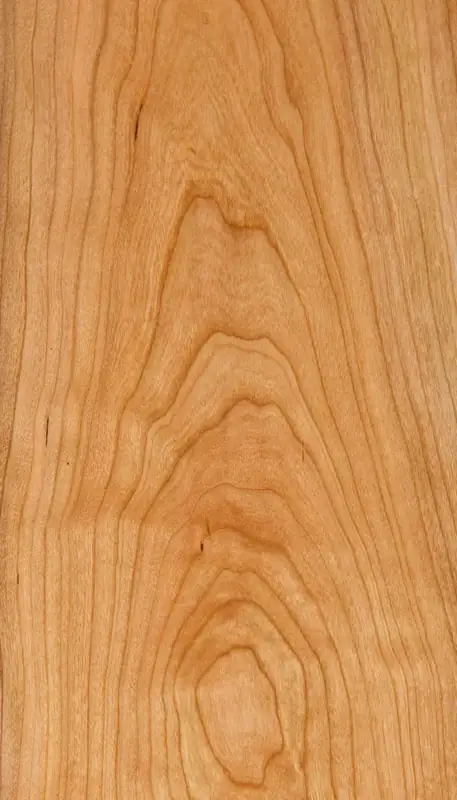
Selection priorities differ by industry. See the species and specification guidance for each.
Cabinet doors · table tops · headboards
View optionsFace veneer · engineered flooring
View optionsLaminated · UV real-wood panels
View optionsDashboards · door panels · trim
View optionsMarquetry · thin wood sheet · figures
View optionsOur sales and engineering teams will confirm availability and figure options, then provide samples, specification sheets and a quotation.