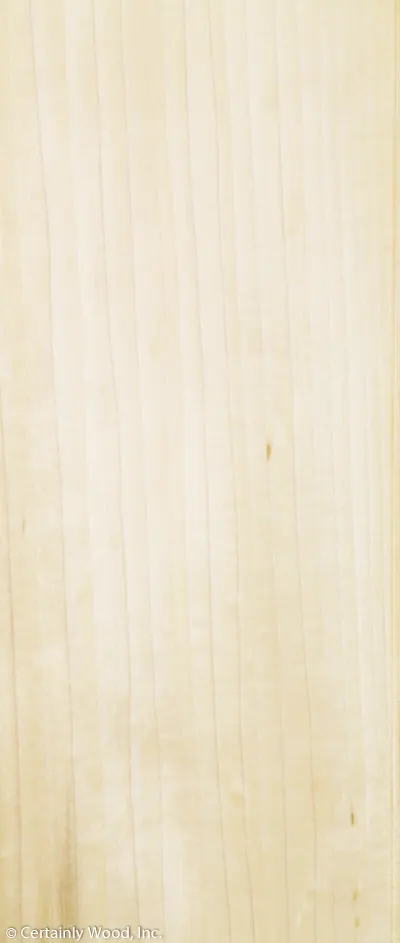
POPLAR VENEER
Poplar Veneer
黄杨木 · Liriodendron tulipifera
Yellow Poplar · Liriodendron tulipifera
POPLAR VENEER
黄杨木 · Liriodendron tulipifera
Yellow Poplar · Liriodendron tulipifera
Poplar (Liriodendron tulipifera) is supplied by Zhanhai as sliced veneer, with species, figure and thickness confirmed against the order specification. Stock species are held for standard categories; dyed and special figure variants are produced per order.
Figures shown are typical ranges. Final supply, availability and figure are confirmed with the quotation and approved sample.
| Botanical name | Liriodendron tulipifera |
|---|---|
| Common name | Poplar |
| Origin | Eastern North America (United States and Southeastern Canada) |
| Air-dry density | 455 kg/m³ air-dry |
| Janka hardness | 540 lbf |
| Structure | Diffuse-porous, fine and uniform texture |
| Typical thickness | 0.3 mm / 0.5 mm / 0.6 mm / 0.8 mm |
| Sheet size | 2500 × 1250 mm |
| Availability | Natural, engineered and dyed; FSC material on request |
The characteristics below describe the species as a whole. Colour, figure and grain vary with growing conditions, log source and cut orientation, which is why every order is confirmed against a sample.
| Property | Description |
|---|---|
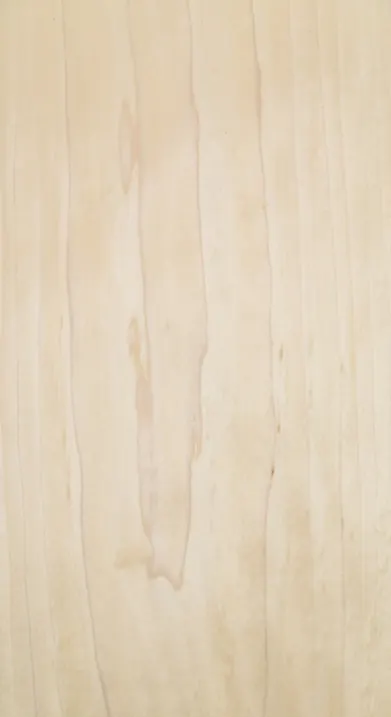
| Heartwood | Creamy to yellow brown, with grey, green or purple mineral streaks |
| Sapwood | Pale yellow to white, not clearly distinguished from the heartwood |
| Grain | Straight, occasionally wavy or interlocked |
| Texture | Fine, uniform and smooth |
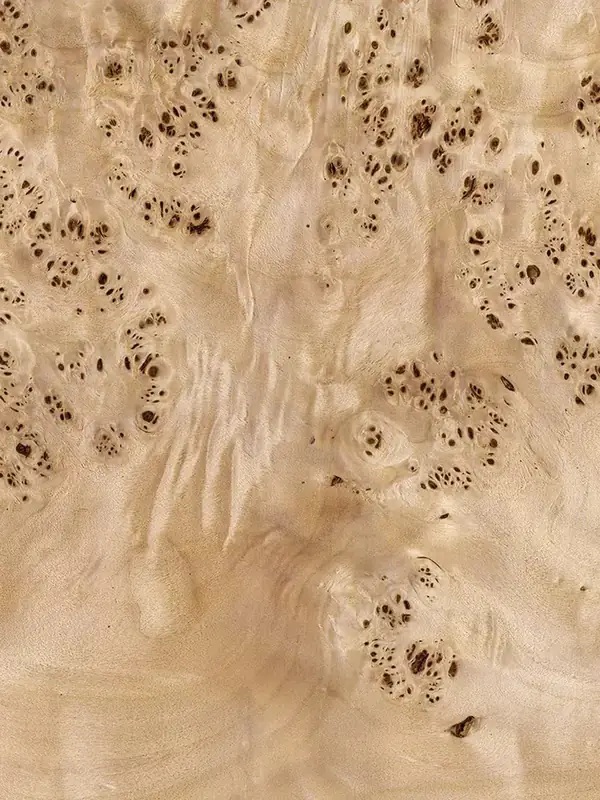
| Figure | Occasional ribbon or curly figure; also widely used with a stained or dyed finish |
| Durability | Moderate; a utility hardwood rather than a high-durability species |
| Workability | Very easy to machine, sand and glue; stable once dried |
| Note | Frequently stained to imitate more expensive species, so dyed poplar is a common panel choice |
Wood property data compiled from public species references: The Wood Database (USDA Forest Products Laboratory Wood Handbook), Wood Atlas 7th Edition, and published veneer technical data sheets.
Photographs of veneer from our own production, sliced from Poplar logs.
Selection priorities differ by industry. See the species and specification guidance for each.
Cabinet doors · table tops · headboards
View optionsFace veneer · engineered flooring
View optionsLaminated · UV real-wood panels
View optionsDashboards · door panels · trim
View optionsMarquetry · thin wood sheet · figures
View optionsOur sales and engineering teams will confirm availability and figure options, then provide samples, specification sheets and a quotation.